





 RoboForex
 Alpari
 XM
XM Exness
 Forex.com
 FP Markets
 11 mins read


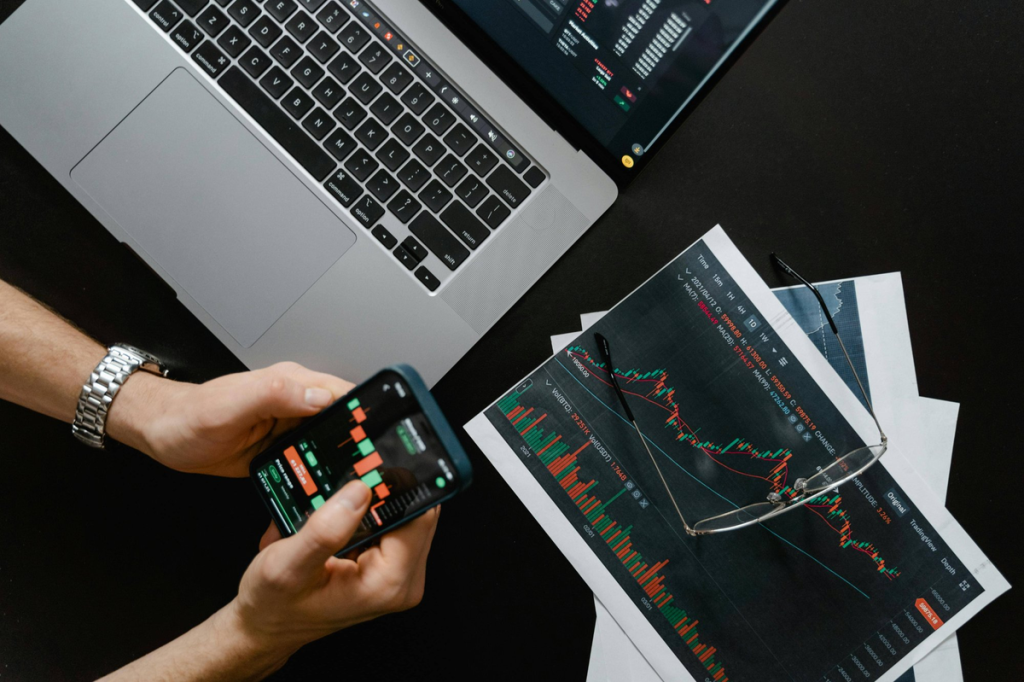
You want to move from one crypto asset to another and you’re staring at three different ways to do it. They all look similar. They are not.
Each approach costs differently, gives you different levels of control, and protects your assets differently. Choosing the wrong one is not a minor inconvenience. Across multiple transactions, it costs real money.
This article cuts through the surface-level definitions and answers the question that actually matters: which approach is right for your specific situation, and why.
What Each Approach Actually Represents
Swapping: Rotating Capital You Already Have
Swapping is the process of exchanging one crypto asset for another directly, without converting to fiat currency first. You start with crypto and end with different crypto. Nothing leaves the on-chain ecosystem.
If you’re new to this, it’s worth understanding the basics on how to swap crypto. It helps you avoid common mistakes like using the wrong network or paying Ethereum mainnet gas for a small trade. Most people swap either on centralized exchanges like Coinbase, Kraken, or Binance (simple UI) or via DEXs like Uniswap, Jupiter, or 1inch (more control, but you manage slippage, approvals, and wallet safety), or instant crypto aggregators like Changelly.
The key strategic implication: swapping keeps your capital inside the crypto market. You are not cashing out and re-entering. You are reallocating between assets without triggering unnecessary withdrawal or deposit cycles.
Efficiency depends on market conditions. Gas fees (the cost of processing a transaction on a blockchain network) fluctuate based on network demand. On Ethereum, those fees can outweigh the benefit of swapping small amounts. On cheaper networks like Arbitrum or Solana, the cost gap narrows significantly.
Buying: The Entry Point From Cash
Buying is the conversion of fiat currency (dollars, euros, or any government-issued money) into a crypto asset. It is the only way to move new capital from the traditional financial system into crypto.
The strategic reality: buying is the most expensive of the three approaches. Payment processors, banks, and exchange platforms all extract a fee. Card purchases typically carry a surcharge between 1.5% and 4.99%. Bank transfers are cheaper but slow. You pay a premium for the on-ramp.
That premium is unavoidable when you are bringing new cash in. But it becomes a strategic error the moment you use buying to rotate between assets you already hold. At that point, you are paying fiat-level fees for a job that swapping handles at a fraction of the cost.
Trading: Taking a Position With Price Control
Trading is the act of acquiring or exiting a crypto position at a specific price you choose. Unlike swapping or buying, which execute at whatever the market offers at that moment, trading lets you set a target. The transaction only completes when the market reaches your level.
That price control is the defining advantage. If you believe Bitcoin will pull back to $58,000 before continuing higher, trading lets you place a limit order (an instruction to buy only at that price) and walk away. Swapping and buying give you no equivalent tool.
The tradeoff is custody. To trade, your funds must sit on a centralized exchange (CEX), a platform managed by a company rather than a smart contract. That creates counterparty risk: the risk that the exchange itself fails, freezes withdrawals, or gets hacked while your funds are on the platform.
How the Three Approaches Compare
The right approach depends on your starting point and your goal. This table maps the key dimensions that determine which one serves you best.
| Dimension | Swapping | Buying | Trading |
| Starting position | You already hold crypto | You hold fiat (cash) | You already hold crypto |
| Cost efficiency | Low (0.05%–1% + gas) | High (1%–5% spread + card fee) | Low (0.05%–0.3% taker fee) |
| Price control | None, market rate only | None, market rate only | Full: set your own price |
| Speed | Seconds, on-chain | Minutes to days | Instant (market) or open-ended (limit) |
| Custody of assets | Yours throughout | Exchange holds until withdrawn | Exchange holds while positioned |
| Best strategic use | Rotating between tokens on-chain | Converting cash into your first crypto | Entering or exiting at a specific price |
| Worst strategic use | Large positions (slippage risk) | Swapping crypto you already hold | One-off casual purchases |
Cost efficiency and custody are the two dimensions that most directly determine which approach fits a given situation. Swapping wins on cost when you are already in crypto. Buying is unavoidable for new cash. Trading wins when price matters more than timing.
When Swapping Is the Best Choice
Rotating Between Assets Without Leaving the Ecosystem
Swapping is the strongest choice when you want to move capital from one crypto asset to another with no intention of converting back to fiat. You stay on-chain, maintain custody throughout, and pay only the network and protocol fees.
For long-term holders who regularly rebalance between assets, swapping is consistently cheaper than withdrawing to fiat and repurchasing. Shifting from ETH to a smaller token, or rotating profits from one position into another, each adds a transaction. The cumulative fee saving across multiple rebalances is substantial.
Accessing Tokens Not Listed on Centralized Exchanges
Many tokens only exist on decentralized exchanges (DEXs): blockchain-based platforms that run on smart contracts rather than company infrastructure. Newer protocols, niche tokens, and early-stage projects often launch there first, sometimes exclusively.
If the asset you want is not available on a CEX, swapping is the only viable path. You connect a self-custody wallet to a DEX and execute the exchange directly. No account creation, no identity verification, no intermediary holding your funds.
When Swapping Becomes the Wrong Call
Swapping breaks down when the position size is large enough that slippage becomes material. Slippage is the difference between the expected price and the executed price. Large swaps move the pool’s price against you in real time, so you receive fewer tokens than the initial quote suggested.
Gas fees create a second problem. On Ethereum mainnet during peak hours, a swap carrying a $500 value may incur $40–$80 in gas costs alone. That is an 8%–16% overhead before the DEX fee.
In those cases, trading on a CEX is cheaper. Or wait for network congestion to drop before you execute.
When Buying Is the Best Choice
The Only Path In From Cash
Buying is not optional when you are converting fiat to crypto for the first time, or adding new cash to your portfolio. Swapping requires you to already hold crypto. Trading requires funds already deposited on an exchange. Buying is the only entry mechanism from cash.
The strategic principle: accept buying’s higher fees as the cost of entry, not as a model for ongoing transactions. Pay it once to get in, then use swapping or trading for everything that follows.
When Dollar-Cost Averaging Makes Sense
Dollar-cost averaging (DCA) means purchasing a fixed dollar amount of an asset at regular intervals, weekly or monthly, regardless of price. The goal is to reduce the impact of volatility by spreading entry points over time rather than committing a lump sum at a single price.
Buying is the right mechanism for a DCA strategy because it accepts fiat directly. If you are allocating $200 per month into Bitcoin, buying is the correct approach. Fees are higher per transaction than trading, but the simplicity and automation on major exchanges make it practical for long-term accumulation.
When Buying Becomes a Strategic Error
Using buying to rotate between crypto assets you already hold is the single most common and costly mistake beginners make. If you hold ETH and want SOL, selling to fiat and re-buying triggers two sets of fiat-level fees.
A swap handles the same rotation in a single step at a fraction of the cost. The difference is not marginal.
The rule: if both the asset you are leaving and the asset you are entering exist on a DEX, swapping is almost always cheaper. Buying belongs at the fiat-to-crypto boundary, not inside the crypto ecosystem.
When Trading Is the Best Choice
Entering at a Price You Choose
Trading becomes the strongest approach the moment price precision matters more than speed. Swapping and buying both give you the market price at the exact moment you transact. If that price works, those approaches are fine. But if you believe the current price is too high, only trading gives you an alternative.
A limit order, placed at a specific price below the current market, lets you define your entry and wait. The exchange executes it automatically when the market reaches your target.
For anyone using technical analysis or managing a portfolio with defined entry criteria, trading is the only approach that supports that discipline.
Managing Larger Positions
As position sizes grow, the cost advantage of trading over swapping becomes more pronounced. DEX slippage scales with trade size. A $50,000 swap on a low-liquidity token can cost several percentage points in slippage alone.
A CEX order book handles large volumes more efficiently because it matches buyers and sellers directly rather than drawing from a fixed liquidity pool.
Trading fees on major exchanges also compress at higher volumes. Frequent traders qualify for maker-taker fee tiers as low as 0.02%–0.05%, significantly below the 0.3%–1% fee typical of a DEX swap. For anyone transacting at scale, that difference adds up quickly.
The Custody Cost You Must Accept
Trading requires your funds to sit on a centralized exchange for as long as you hold open positions or leave balances unattended. That is a structural cost of the approach, not a footnote.
Exchanges have failed, been hacked, and frozen withdrawals. The users who lost funds were not reckless. They simply left assets on the platform longer than necessary.
The discipline that makes trading sustainable: withdraw funds you are not actively positioning. Use the exchange as an execution venue, not a storage solution. Once a trade closes and you have no immediate follow-up position planned, move the balance to a self-custody wallet.
The Situations Where People Choose Wrong
The Most Expensive Mistakes
These are not edge cases. They represent the patterns that drain capital from beginners and intermediate users consistently.
Swapping a large position when trading on a CEX would cost less. If the asset is listed on a major exchange and you are moving significant size, slippage and gas on a DEX often exceed the CEX trading fee. Compare the total cost before committing.
- Buying crypto you already hold just to switch assets. Selling to fiat and re-buying in a different token doubles your transaction costs without any benefit. Every rotation between assets you already hold should go through a swap or a CEX trade.
- Trading for a one-off casual purchase. If you are buying $100 of ETH once with no price target or active strategy, the friction of funding a CEX account defeats the purpose. Buying directly is simpler and the fee difference on small amounts is negligible.
- Holding large balances on a CEX after a trade closes. Every day your funds sit on an exchange is a day you carry counterparty risk you do not need. Close the position and move the balance out.
- Swapping on Ethereum mainnet during peak gas hours. A swap that costs $3 at 3 a.m. can cost $60 at midday during high network activity. Move the transaction to a Layer 2 network (a faster, cheaper blockchain built on top of Ethereum) or wait for gas to drop.
- Using a limit order when speed matters more than price. Limit orders do not guarantee execution. If you need the asset immediately, a swap or a market order fills at once. A limit order that never hits its target means you miss the opportunity entirely.
A Decision Framework by Situation
- You have cash and no crypto: buy. Accept the entry fee as the cost of getting in, then stop using buying for rotation.
- You hold crypto and want a different token: swap, unless the position is large enough that DEX slippage exceeds CEX trading fees.
- You have a price target and patience: trade with a limit order on a reputable CEX, then withdraw when the position closes.
- The token you want is not on any CEX: swap on a DEX. It is the only option.
- You are moving a large position and slippage is a concern: trade on a CEX order book, where liquidity is deeper and fees are lower at scale.
- You want to keep custody throughout: swap only. Buying and trading both require passing funds through a third party at some point.
The Verdict
No single approach is universally best. Each one serves a specific situation, and the cost of using the wrong one compounds over time.
Buying belongs at the fiat-to-crypto boundary. Use it to bring new capital in, and use it for recurring accumulation through DCA. Using it to rotate between assets you already hold is the most common way beginners overpay.
Swapping belongs inside the crypto ecosystem. It is the cheapest, fastest way to move between assets when you are already on-chain and custody matters to you. Its weakness is scale: large positions and volatile tokens carry slippage costs that erode the fee advantage.
Trading belongs wherever price precision or position size makes the difference. It costs less at volume, gives you control over your entry and exit, and handles large orders more cleanly than any DEX. The price you pay is custody, and the discipline to withdraw when you are done.
Match the approach to the situation. That single habit saves more money than any market timing ever will.
