





 RoboForex
 Alpari
 XM
XM Exness
 Forex.com
 FP Markets
 13 mins read


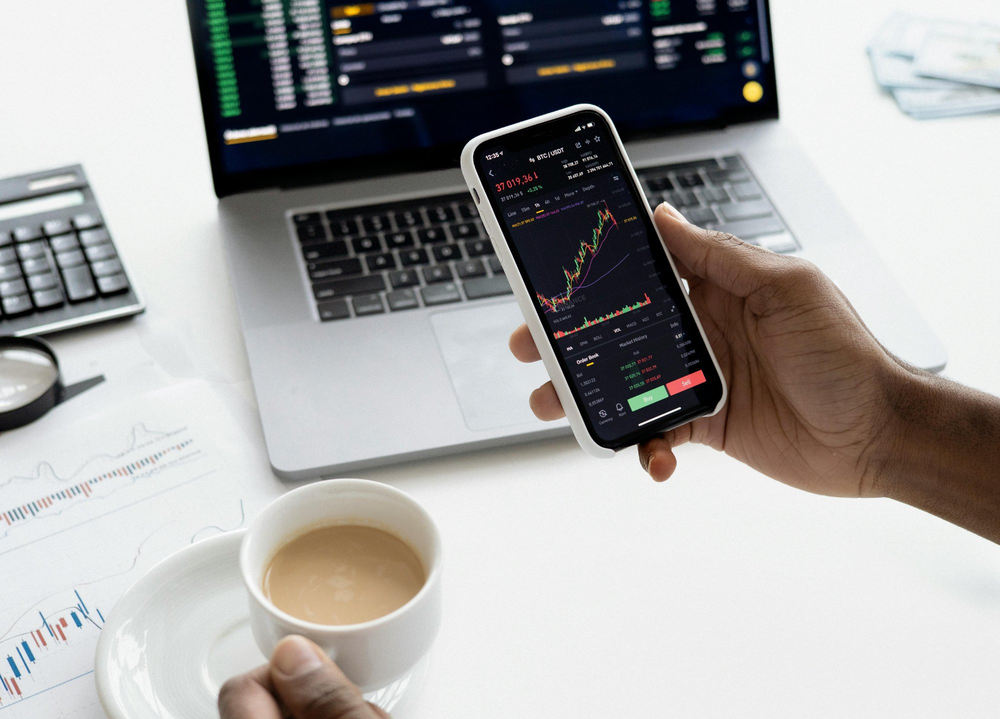
If you’re interested in trading at all, you’ve probably already seen the pitch for funded trading: do your research, pass an evaluation, get access to a six-figure trading account, and keep up to 80–90% of the profits. Sounds great, especially since you don’t have to risk your own capital, beyond a modest fee, that is.
Technically speaking, that is true. However, you should also know that this is just the simplified surface version of a funded trader program. The real story is, of course, more complex.
Below, we walk you through the mechanics, the incentives, the trade-offs, and the slightly unusual but important scenarios that don’t fit the simple marketing story (like trailing drawdown shrinking your buffer as you profit, or firms changing rules mid-cycle; it can happen). If you’re serious about trading (and not just curious), this is all the framework you need.
What Is a Funded Trader Program?
Let’s get the basics covered so we can get more technical (and practical) later on. A funded trader program is exactly what it sounds like: a program that allows you to trade with a firm’s capital instead of your own. But this is possible only after you pass their defined evaluation process.
So, instead of depositing $25,000 of your own money, you prove you can manage risk and generate returns under strict constraints. In exchange, the firm takes a share of your profits and enforces rules that protect its capital.
These programs are typically offered by proprietary trading firms, also known as prop firms. Some are independent evaluation companies, while others operate through established brokers (as a part of a larger broker-backed ecosystem).
In most cases, you’re not an employee. At least not in the traditional sense. You’re an independent trader operating under a contractual agreement.
How It Actually Works: Step-by-Step
Most articles compress this part into four bullets, which is fine for a basic understanding of the topic. But if you’re seriously considering becoming a funded trader, we’re of the opinion that you need to understand every operational detail, right from the get-go, from account selection to your first payout.
So here’s the full lifecycle, nitty-gritty details included.
Step 1: Choose the Account Size
You start by selecting a notional account size. For example, $25,000, $100,000, or $200,000.
This number determines:
- Your evaluation fee
- Your maximum drawdown
- Your daily loss cap
- Your potential payout ceiling
It’s important to understand that your real risk is not the full account size. It’s the maximum drawdown.
Here’s an example:
- $100,000 account
- 10% max drawdown
- You are effectively trading with a $10,000 risk buffer
That’s your real constraint. If you hit -$10,000 equity, the account terminates.
Before you pay any fee, you should calculate:
- What % return must you generate to pass?
- How many R-multiples does that require?
- How many trades does your system need statistically?
If you can’t answer these, put a pin in it. Stop and model it first.
Step 2: Pay the Evaluation Fee and Create Your Account
After selecting the account size, it’s time to pay the evaluation fee.
You’ll then receive:
- Login credentials
- Access to a dashboard
- A contract outlining rules
Now, you may think the contract is just a formality, but we want to warn you that it’s not. You should absolutely read it; not skim it, but actually read everything.
When you’re doing that, pay attention to:
- How drawdown is calculated (balance vs equity)
- Time limits (30 days? unlimited?)
- Minimum trading days
- Inactivity clauses
- News trading rules
Step 3: Build a Pass Plan
Most traders skip this and go straight to execution. And sure, some get lucky, but do you really want to rely on chance? Of course you don’t. You want to be prepared and have a strategy in order to increase your chances of success: long-term success and financial stability.
So, define:
- Daily max loss (below firm limit)
- Target daily gain
- Position size per trade (fixed % risk)
- Maximum open positions at once
- Trading session window
Here’s an example structure for a $100K account:
- Firm daily limit: 5% ($5,000)
- Your self-imposed daily limit: 2% ($2,000)
- Risk per trade: 0.5–1%
You want a buffer because it will protect you from emotional spikes.
Keep in mind, during this phase, you’re not trying to maximize returns during evaluation. You’re trying to survive within constraints.
Step 4: Execute the Evaluation (Phase 1)
You now trade in a simulated environment under live market conditions.
Your objectives:
- Hit profit target (e.g., +8%)
- Avoid breaching drawdown rules
- Satisfy minimum trading days
What matters most:
- Position sizing consistency
- Avoiding oversized trades after early gains
- Respecting volatility expansion
Many traders fail after hitting 70–80% of the target because they suddenly increase size. The evaluation isn’t testing aggression. It’s testing risk control.
In practice, slower equity curves pass more often than vertical spikes.
Step 5: Phase 2 (If Required)
Some firms require a second stage with:
- Lower profit target
- Same or tighter drawdown rules
It’s a phase that some firms insist on because it confirms consistency.
Psychologically, this part is harder. You’ve already “proved” yourself once. Now you must repeat disciplined behavior without getting impatient.
But it’s important to treat it like Phase 1. So, same rules, same structure. And no shortcuts.
Step 6: Verification and Compliance Review
After passing, the firm reviews your trading behavior.
They check for:
- Latency arbitrage
- Exploitation of demo pricing anomalies
- Copy trading from prohibited sources
- High-frequency strategies that break terms
This step matters more in 2026 than before. Increased regulatory scrutiny globally, including oversight by bodies such as the U.S. Commodity Futures Trading Commission (CFTC), has pushed firms to tighten compliance procedures.
We can’t stress being careful here enough. Because if your trades violate policy, the account may be denied funding even after you hit targets.
Step 7: Receive the Funded Account
Once approved, you move to the funded stage.
This may involve:
- A new live trading account
- Or continued simulated trading with capital allocation behind the scenes
You now operate under:
- Same drawdown rules
- Profit split agreement (e.g., 80/20)
- Payout schedule (biweekly, monthly, etc.)
Now your goal changes.
- Evaluation goal = pass.
- Funded goal = stay funded.
Different mindset entirely.
Bear in mind that today, most retail prop firms keep traders on demo accounts and simply pay out from a pool of evaluation fees.
Step 8: Trade Under Ongoing Risk Constraints
Most funded traders fail within the first 90 days. Not because they lack skill, but because they lack discipline.
If you want to be different and better, you must:
- Maintain consistent position sizing
- Respect daily loss caps
- Avoid revenge trading after payout withdrawals
And note this: some firms trail drawdown from peak equity. Meaning, if you grow the account to $110,000 and the max drawdown is 10%, your new floor may trail upward.
Take time to understand how your specific program handles this. It changes your risk ceiling, so it’s important.
Step 9: Request a Payout
When eligible, you submit a payout request via dashboard.
You’ll need:
- Identity verification
- Banking details
- Tax documentation (depending on jurisdiction)
Profit split applies here.
Example:
- $12,000 profit
- 80% split
- You receive $9,600
Some programs increase your split after consistent performance. This, once again, proves that consistency matters.
Tip: Treat this as taxable income; better yet, consult a professional.
Step 10: Scaling
Many programs allow scaling after:
- Sustained profitability
- Multiple successful payouts
- No rule violations
An example scaling path:
- $100K → $200K → $400K → $1M allocation
At this stage, your focus will move to capital efficiency and risk normalization.
Scaling amplifies both returns and mistakes. So only scale if your edge remains statistically stable.
How Much Can You Actually Make?
Marketing pages highlight six-figure payouts. And look, those do exist.
But let’s run some more realistic numbers.
Assume:
- $100,000 funded account
- 5% monthly return (which is aggressive but plausible for strong traders)
- 80% profit split
That equals $4,000 per month to you.
But now, let’s adjust for reality:
- Many traders average lower than 5%
- You might skip months due to drawdown resets
- Some firms require payout minimums
So the income range becomes variable. Very variable, actually: from $0 to substantial.
Again, consistency matters more than spikes. For example, institutional traders at firms like Goldman Sachs aren’t evaluated on single-month wins. They’re evaluated on risk-adjusted return. Funded programs mirror that logic in compressed form.
The Risk Model Behind the Scenes
Most evaluation environments operate in simulated markets. That’s not inherently bad, but it changes the economics. Because this means that during the evaluation stage, you are risking your fee, but the firm usually isn’t risking actual capital yet.
The rules (drawdown limits, profit targets) are designed knowing most retail traders lose money in leveraged markets. So the structure is built to filter out high-risk behavior.
And bear in mind, retail leveraged trading does carry significant risk, with a high percentage of accounts losing money. According to CFTC, about one-third of customers made a profit while two-thirds lost money after costs when trading over-the-counter (OTC) forex with registered dealers.
So, prop firms structure evaluations knowing most participants will not pass. Evaluation fees are what help fund payouts to successful traders.
Of course, this doesn’t make programs illegitimate. But it does mean your probability assumptions should stay realistic.
Ask yourself:
- What percentage of traders pass Phase 1?
- What percentage remains funded for 6+ months?
- Does the firm publish verified payout data?
What Changed Recently: Quick 2025–2026 Trends
The funded trader space has matured. Recent changes include:
- Tighter risk rules in response to volatility spikes
- Increased scrutiny from regulators in several jurisdictions
- More transparent payout verification systems
- Stricter news-trading restrictions
Who Funded Trader Programs Are Actually For
Be honest with yourself here. Because while funded trading can be lucrative, it can also drain your time, money, and energy that would be better spent on other ventures.
This model suits you if:
- You already trade profitably on a small account
- You understand risk per trade (not just win rate)
- You track metrics (expectancy, R-multiples, max adverse excursion)
- You treat trading like a business
It does not suit you if:
- You chase high leverage for excitement
- You rely on signal groups
- You don’t use stop losses
- You need stable, predictable monthly income
Here’s perhaps the most important thing to understand here: funded trading amplifies discipline. If you already have it, fantastic. But it also amplifies undisciplined behavior, so be brutally honest with yourself here. Don’t be overly optimistic; look at your past behaviors and patterns and go from there.
Common Rules That Trip Traders Up
Let’s get specific.
Daily Drawdown
This often calculates from equity high-water mark, not starting balance. If you gain $3,000 in the morning and give back $4,000 by afternoon, you may breach the daily cap even if you’re net positive overall.
News Restrictions
Some firms prohibit opening trades within minutes of major economic releases (e.g., Non-Farm Payrolls). Check event definitions carefully.
Consistency Rules
Some programs prevent you from generating 80% of profits in one trade. They want stable distribution.
So your strategy must fit the rulebook. If this sounds obvious, great. But know that many traders ignore it.
How to Choose the Right Program
Don’t just compare profit splits.
Evaluate:
- Regulatory alignment
- Broker execution quality
- Registration or ongoing membership fees
- Slippage conditions
- Maximum scaling potential
- Payout frequency
- Community transparency
A word on fees. Some programs rely heavily on upfront fees. Others, such as Axi’s funded trader program (Axi Select), use a structured progression model based on performance metrics like an Edge Score. So there are no registration fees at all. Instead, the focus is on sustained performance development, not passing a challenge fast.
But the most important thing to look for is an established infrastructure. You want programs that are backed by globally recognized brokers, as they often offer a clearer operational structure, which reduces counterparty risk.
And read independent reviews. Not affiliate blogs. Look for verifiable payout proof.
A Quick Self-Assessment Framework
Before you apply, run this checklist:
Capital discipline
- Fixed risk per trade under 1–2%?
- Clear max daily loss rule?
Strategy clarity
- Defined entry and exit logic?
- Backtested across multiple market conditions?
Psychology
- Can you stop trading after hitting daily loss?
- Can you avoid revenge trades?
Administrative
- Do you understand payout structure?
- Have you read the contract?
If you hesitate on more than two items, fix that first.
Funded Trading vs. Trading Your Own Capital
Here’s a direct comparison:
| Factor | Funded Program | Personal Capital |
| Upfront Cost | Low (Evaluation Fee) | High (Full Deposit) |
| Profit Split | 70% – 90% to Trader | 100% to Trader |
| Risk Rules | Strict / Automated | Self-Defined |
| Loss Liability | Limited to Fee | Full Capital at Risk |
| Psychology | “Passing” Pressure | Financial Loss Pressure |
So what’s better?
If you have limited capital but proven skill, funded programs can accelerate scale. If you have substantial capital and flexible risk tolerance, self-funding offers more autonomy.
Real-World Scenario
Let’s say you trade EUR/USD with a tested 1.8R expectancy.
On your $5,000 personal account, you risk 1% per trade. That’s $50 per position.
On a $100,000 funded account, you still risk 1%. Now that’s $1,000 per trade (subject to drawdown rules).
It’s the same strategy. However, it’s a different output.
Now here’s something very important that many people don’t realize in the beginning. The psychological impact of losing $3,000 in a day, even if allowed, feels different than losing $150. And that emotional delta determines whether you survive.
Again, be honest with yourself here; do you have the mental capacity to deal with this? Not just once, but frequently. If your baseline is already anxious, this may not be something you want to do long-term.
Alternatives You Should Consider
Before committing, weigh other paths:
Capital partnerships: Private investors sometimes allocate funds to traders with verified track records.
Copy trading platforms: Platforms allow others to mirror your trades, generating performance fees.
Traditional prop firms: Some institutional firms still hire discretionary traders, though competition remains intense.
Each path carries trade-offs in autonomy, income stability, and scalability.
Common Pitfalls
Most traders fail funded challenges due to:
- Overtrading to hit profit targets quickly
- Increasing position size after early gains
- Ignoring volatility expansion
- Trading during restricted news windows
- Treating evaluation like a sprint
In practice, slower pacing improves pass rates. Think in terms of controlled distribution of returns.
Frequently Asked Questions
Is funded trading legitimate?
Yes, but legitimacy depends on the firm’s structure, transparency, and compliance. Always verify the company background and payout history.
Are accounts real or simulated?
Evaluation stages are usually simulated. Funded stages may be live or mirrored. It depends.
Can you make a full-time income?
It’s possible, but inconsistent at first. So it’s best to treat it as performance-based income in the beginning.
What happens if you breach a rule?
Most programs terminate the account. Some offer resets for an additional fee.
Do you pay taxes?
Yes. Income classification depends on your jurisdiction. It’s best to consult a tax professional.
Author bio: Daniela Kovac is a markets analyst and independent trading systems researcher with years of experience studying retail and proprietary trading models. Her work focuses on risk management frameworks, capital allocation structures, and the psychology of performance under constraints.
