

 6 mins read


A lot, in forex trading, is just a unit of measurement. It tells you how many currency units you are buying or selling in a single trade. Choosing between a micro, mini, or standard lot is one of the first real decisions a trader makes, and it has a direct impact on risk exposure, margin requirements, and how much each pip movement is worth to your account. Get this wrong early on, and you either risk too much too fast or move so cautiously that progress feels invisible.
There are four common lot sizes traders encounter, each ten times smaller than the one before it. A standard lot equals 100,000 currency units. This is the original, full-size lot that institutional traders and experienced traders have used for decades.
One pip in a standard lot is worth $10. A mini lot is worth 10,000 currency units, exactly one tenth the size of a standard lot. One pip in a mini lot is worth $1.
Mini lots are often used when traders outgrow micro lots but are not yet ready for the swings that come with full-sized positions. A micro lot is 1,000 currency units, one-tenth the size of a mini lot. One pip in a micro lot is worth $0.10.
Because the dollar value per pip is so small, micro lots allow for lower risk. A nano lot is equal to 100 currency units. Not every broker offers this size, but where it is available, it gives traders an even sharper level of control over position size, useful for testing a trading strategy with minimal capital at stake.
Why Lot Size Matters More Than Most Beginners Realize
Every trader enters the markets hoping to generate profit. However, professional traders understand that protecting capital comes before making money. Your trade size determines:
- Potential loss/profit
- Margin requirements
- Leverage usage
- Overall exposure to market movements
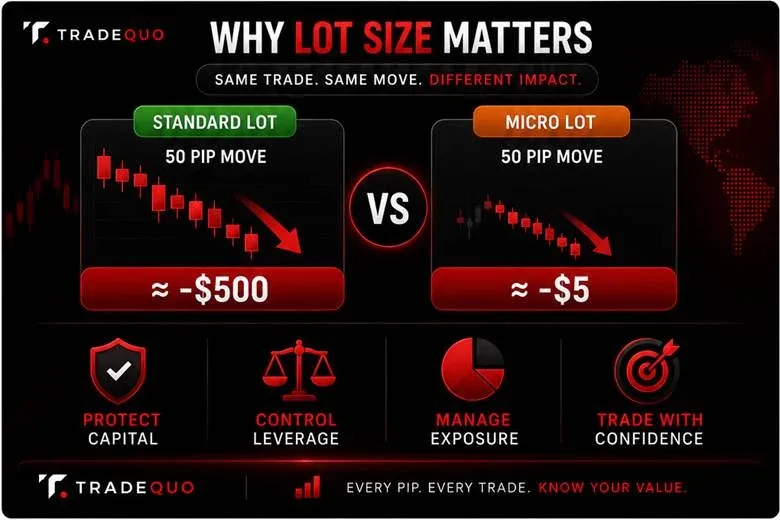
Imagine two traders entering the same EUR/USD position. The first trader uses a standard lot. The second trader uses a micro lot.
If the market moves 50 pips against both positions, the standard lot trader loses approximately $500, while the micro lot trader loses approximately $5. The trading strategy may be identical, but the outcome for the account is dramatically different. This is why lot size selection sits at the heart of risk management.
Matching Lot Size to Your Account Balance
The size of your account is the primary factor in determining the appropriate lot size. A general rule of thumb for most investors is to never risk more than 1-2% of your trading account on a single trade. This principle helps ensure that a string of losses doesn't wipe out your capital.
- Smaller Accounts ($1,000 - $5,000): Micro lots are the most sensible choice. Their minimal pip value allows you to set stop-loss orders effectively and keep risks within the 1-2% recommendation.
- Mid-Size Accounts ($5,000 - $25,000): As your account grows, you might start incorporating mini lots (0.10 lots) to scale your position, though many still use micro lots for precise risk control.
- Large Accounts ($25,000+): Trading with standard lots is more common at this level. However, it's important to note that a 100-pip move against a standard lot represents a $1,000 loss, making it a decision only for those with high risk tolerance.
Before you place a trade, determine the required margin.
Margin and Leverage Considerations
Leverage allows you to control a large position with a relatively small amount of capital. For example, with a 1% margin requirement, you would need $1,000 in your account to create and sell a standard lot position. Micro forex lots allow you to trade with one-tenth the margin requirement, reducing the pressure on your account balance.
Understanding leverage and lot size together helps traders create a more sustainable approach to trading. Many brokers allow new traders to practice on a demo account, where you can experiment with all three lot sizes using virtual cash. This is an invaluable way to measure how pip movements affect your account balance and to build a trading plan.
It is one of the best alternatives to risking real funds before you feel confident. Your trading strategy should also guide your lot size choice. A scalper who targets small pip movements may use larger lot sizes, while a swing trader might use smaller positions to handle larger price fluctuations.
A Simple Example of Lot Size Selection
Suppose a trader has a $2,000 account. Their risk management plan limits risk to 1% per trade. This means the maximum acceptable loss is $20.
If the trader uses a stop loss of 20 pips, a micro lot may fit comfortably within their risk parameters because each pip is worth approximately $0.10. Choosing a larger position could increase exposure beyond the trader's planned risk level. This example highlights why the lot size should always be determined before entering a position.
Many beginners focus entirely on potential profit and ignore trade size. Some of the most common mistakes include:
- Trading standard lots with limited capital
- Using excessive leverage
- Ignoring risk management rules
- Increasing position size after a losing trade
- Choosing trade size based on emotion rather than strategy
- Failing to monitor exposure across multiple positions
Think of the relationship between your account, risk tolerance, and lot size as a simple system.
Common Mistakes New Traders Make
You don’t have to use the same lot size forever; as your account grows and your knowledge improves, you can adjust the scale of your trades to match your goals. The decision between micro, mini, or standard lot sizes isn't about what’s "best" in general - it’s about what’s best for you and your account. Start small, prioritize risk management, and use the right tools to monitor your performance.
Final Remarks
The key is to let your account balance and risk tolerance drive the decision, not the size of the gains you are hoping for. Markets reward patience and proportional risk far more often than they reward oversized positions on a single currency pair. If you feel ready to put your knowledge into practice and start trading, visit the broker’s website to explore how available account types can help you execute strategy with precision.
A micro lot equals 1,000 currency units. One pip in a micro lot is worth approximately $0.10, making it a popular choice for beginners and smaller accounts. A mini lot is worth 10,000 currency units, while a standard lot equals 100,000 currency units.
A mini lot is one-tenth the size of a standard lot. Micro lots reduce risk in trading, require less capital, and help traders practice risk management while gaining experience in real market conditions. Choose a lot size based on your account balance, risk tolerance, trading strategy, stop loss distance, and overall exposure.